Photo: Kamranki, CC BY-SA 4.0, via Wikimedia Commons
In 1941 a Swiss electrical engineer named George de Mestral came home from a walk in the hills with his dog, and both of them were covered in burrs. Most of us would have pulled them off, sworn a bit and moved on. De Mestral put one under a microscope.
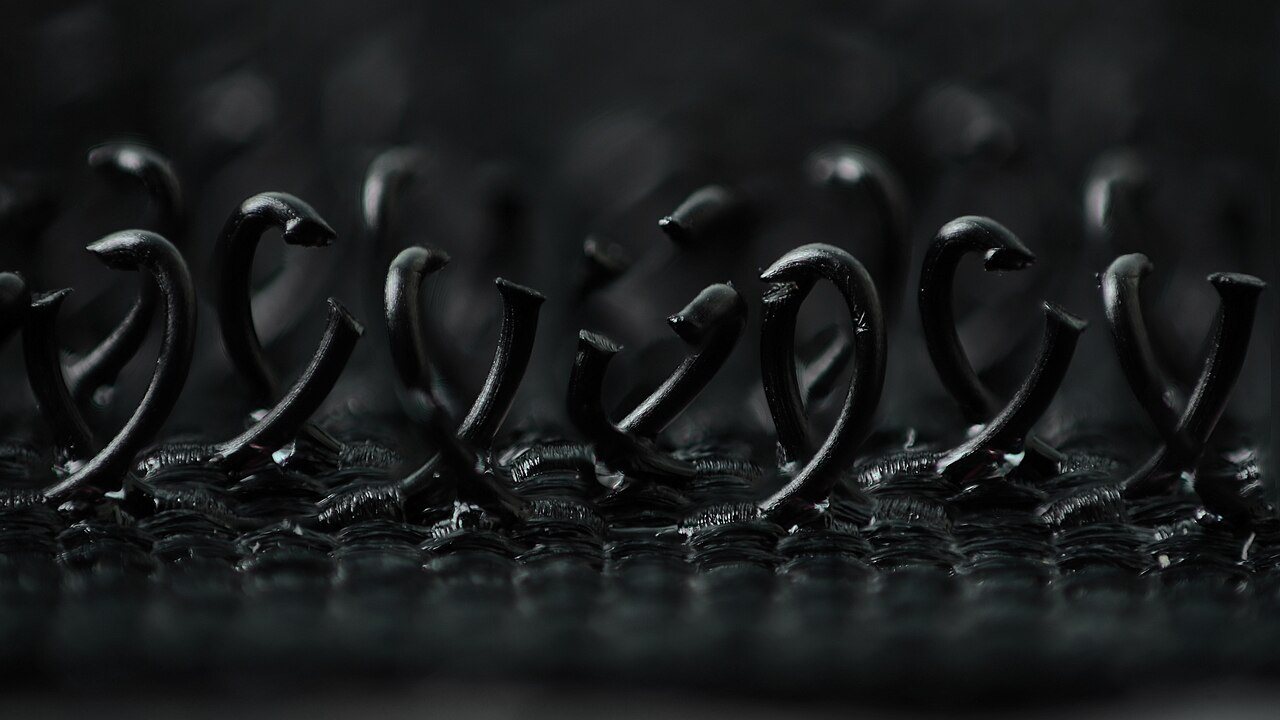
What he saw was a seed head covered in tiny hooks, and those hooks were catching on the loops of thread in his clothes and the tangles in his dog's fur. It took him the best part of a decade to copy that in fabric, but the result is the hook-and-loop fastener that now closes children's shoes, blood pressure cuffs and the pockets on half the jackets in my wardrobe.
It is also one of the best-known examples of what engineers now call biomimicry: copying a design that nature has already tested.
Why a burr sticks
The burrs that started all this came from burdock, a common weed in Europe and North America. Each burr is a seed case covered in stiff spines, and the tip of every spine curls back into a small hook. That hook does not grab anything smooth. It needs something to slide under: a loop of yarn, a curl of fur, a fibre with a gap beside it.
Once it is under, pulling at an angle only makes the hook catch tighter. You have to peel it away, lifting a few hooks at a time, which is why a burr can ride on a sock for an entire walk.
Years of trial and error
De Mestral's idea was easy to describe and hard to build. He needed one strip covered in thousands of tiny, stiff hooks and another covered in soft loops, and both had to be cheap to make and survive being pulled apart over and over.
Cotton was the first material he tried, and it wore out quickly. The breakthrough came with nylon, which could be woven into loops and then treated so that it held its shape. The usual account is that he found a way to cut some of the woven nylon loops to form hooks, and that heat treatment made them stiff enough to grip.
He applied for a Swiss patent in 1951, and it was granted in 1955. The name he chose, Velcro, comes from two French words: "velours," meaning velvet, and "crochet," meaning hook.
Space suits and a trademark headache
The fastener took a while to catch on with fashion designers, who reportedly thought it looked cheap. It found a better home in places where function mattered more than looks. NASA used hook-and-loop fasteners in the Apollo programme so astronauts could stick equipment to walls and keep things from floating around the cabin, and that association did wonders for its image.
Here is the curious bit. De Mestral's patents expired decades ago, so plenty of companies make the same kind of fastener. Velcro is the brand name of one company, and that company has been trying for years to stop people using it as a generic word. In 2017 it even put out a tongue-in-cheek music video with its lawyers singing "Don't Say Velcro," asking everyone to say "hook and loop" instead. I admire the effort. I also suspect almost nobody changed their vocabulary.
How to clean a clogged strap
The most common complaint about hook-and-loop is that it stops sticking, and the culprit is usually the hook side, not the loops. Lint, hair and fluff get caught in the hooks and fill them up, so they have nothing left to grab with.
The fix is cheap. Take a fine-toothed comb, a stiff old toothbrush or a pet slicker brush and drag it firmly along the hook strip in one direction. Hold the fabric taut with your other hand. You will be surprised (and a little disgusted) at how much comes out. For stubborn bits, a pair of tweezers works, and a strip of strong tape pressed on and pulled off can lift the last of the fuzz.
If the loop side is flattened, brush it gently in the opposite direction to lift the loops back up. Do not use heat to try to fluff them, because nylon can melt or shrink.
A quick safety note: if you use a seam ripper, craft knife or small scissors to pick out threads that have wound themselves into the hooks, cut away from your fingers and go slowly. It is very easy to slip on a curved strap.
Habits that keep it working
The easiest win is to close the fastener before anything goes into the washing machine. Open hooks grab everything in the drum, they pull threads on jumpers, and they come out stuffed with lint. Closing them keeps both problems away.
Air drying helps too. High dryer heat is hard on nylon over time, and a strap that has been cooked a few times never grips quite as well.
When a strap really is worn out, replacements are easy to find in sewing shops, and sew-on strips usually last longer than the self-adhesive kind on fabric. Adhesive strips are best kept for hard surfaces, like fixing a remote control to the side of a table, which is one of my favourite small uses for the stuff.
The trick that does not work
You will see advice online to revive hook-and-loop by soaking it in hot water or fabric softener. I would skip it. Softener can coat the fibres and make the loops slicker, which is the opposite of what you want, and hot water does nothing for hooks clogged with lint. A comb and five minutes of patience will do far more, and if that fails, a new strip costs very little to sew on.
See more of us on GoogleAdd Hacks Detective as a preferred source and our stories can show up more often for you in Top Stories.