Photo: HaJunkiyada, CC BY-SA 4.0, via Wikimedia Commons
Every supermarket avocado seems to come in one of two conditions: hard as a cricket ball or already brown inside. If you plan guacamole for Saturday and buy on Thursday, you will almost certainly get the cricket ball.
The good news is that a hard avocado is supposed to be hard. Avocados don't ripen on the tree. They only start softening after they've been picked, which is why growers can leave fruit hanging for weeks and why the ones in the shop are often nowhere near ready. Your job is to speed that process up a little, and there's one trick that does it properly.
The bad news is that several popular shortcuts don't ripen an avocado at all. They just make it soft.
Why the paper bag works
Avocados belong to a group of fruits that keep ripening after harvest and give off ethylene, a plant hormone that tells the fruit (and the fruit next to it) to get on with it. Bananas, apples, pears and tomatoes are in the same club.
Put a hard avocado in a paper bag, fold the top over and leave it on the counter. The bag holds the ethylene close to the fruit, so the avocado ends up bathing in its own ripening signal. Add a ripe banana or an apple, both of which give off plenty of ethylene, and you raise the dose.
Paper matters here. A plastic bag also traps ethylene, but it traps moisture too, and a damp, warm avocado in a sealed plastic bag is a good way to grow mold. Paper lets moisture escape while keeping most of the gas in.
How long it actually takes
A firm avocado left loose on the counter usually takes several days to ripen at room temperature. In a paper bag with a banana or apple, you can often shave a day or two off that. It depends on how hard the fruit was to start with and how warm your kitchen is, so check once a day rather than trusting a schedule.
Warmth helps, within reason. A spot near (not on) a warm appliance will move things along faster than a cold windowsill. Direct sun just cooks one side.
The trick has limits. An avocado picked too immature may never ripen properly, however much ethylene you give it. It'll go soft and rubbery instead of creamy, and no bag in the world fixes that. If you've had a few avocados go straight from hard to rubbery from the same shop, the problem is probably the fruit, not your method.
The oven and microwave tricks fake it
You'll see this one all over the internet: wrap a hard avocado in foil and bake it for ten minutes, or prick it and microwave it for thirty seconds. It does come out softer, and that's about all it does.
Ripening changes the fruit's chemistry as well as its texture. Heat softens the flesh by partly cooking it, so you get something you can mash, but with a flat, slightly vegetal taste and none of the buttery richness of a properly ripe avocado. If you're mashing it into something with lots of lime, salt and chili, you might get away with it. On toast, you won't. (I'd rather wait a day than eat that, but it's your toast.)
Safety note: if you do try the heat method, let the avocado cool before you handle it, and pierce the skin before microwaving so steam can escape. Food heated in the microwave can be much hotter inside than it feels outside.
How to tell when it's ready
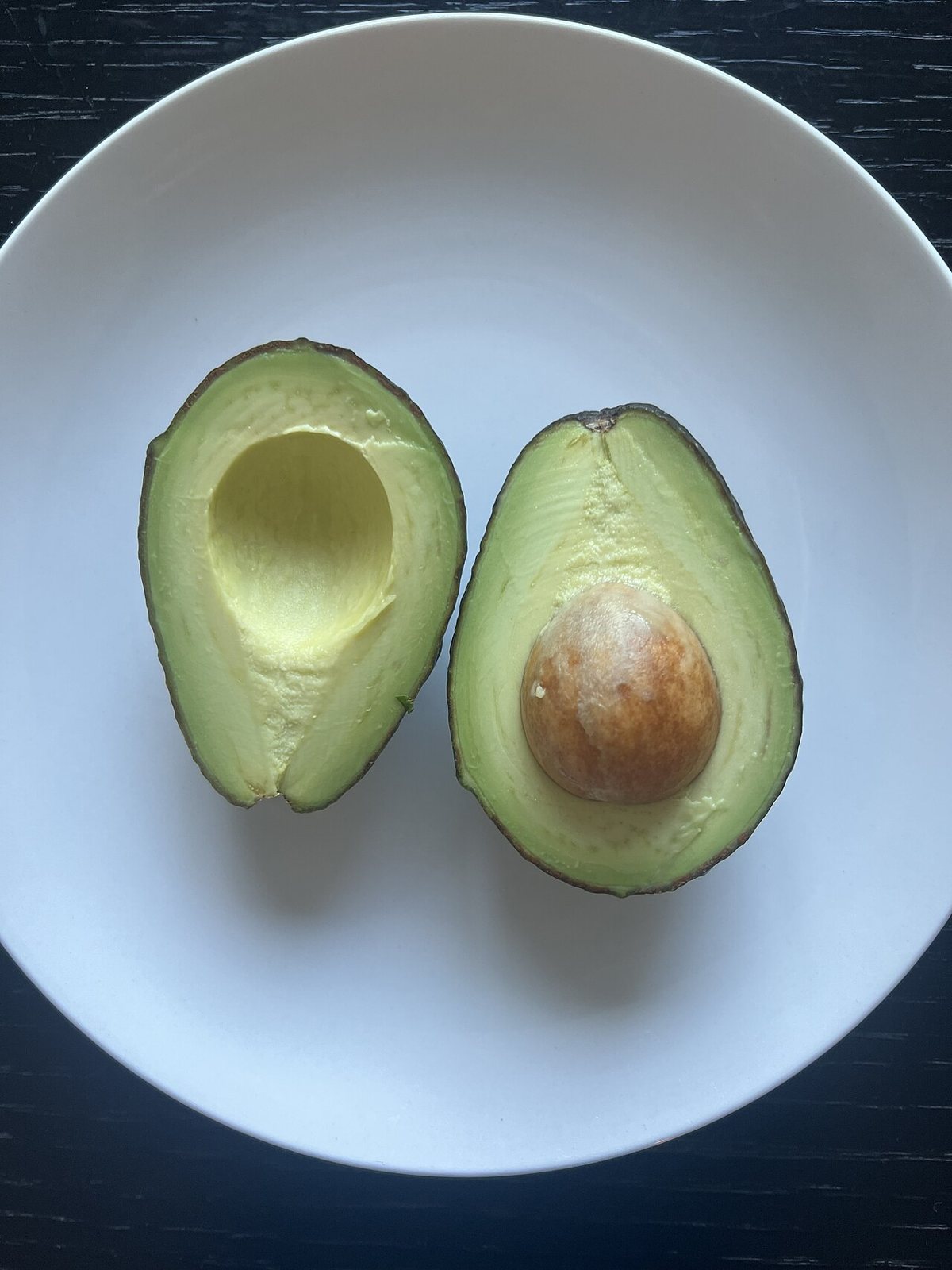
Don't press with your fingertips. That bruises the flesh, and the next shopper inherits your dents. Cradle the avocado in your palm and squeeze gently. A ripe one gives a little, like a firm peach. If it feels mushy or the skin has sunken patches, it's past its best.
The stem trick is useful too. Flick off the small stem cap at the top. If it comes away easily and the spot underneath is green, the avocado is ready. If it's brown, the fruit may be overripe inside. If the cap won't budge, give it another day.
Skin color only helps with Hass, the dark, pebbly variety that turns from green to near black as it ripens. Smoother green varieties can stay green when they're perfectly ripe, so go by feel.
Keeping it ripe once you get there
Once an avocado is ripe, move it to the fridge. Cold slows ripening down a lot and can buy you a few extra days. Just don't refrigerate hard avocados, since cold can keep them from ripening evenly once you take them out.
For a cut half, the famous trick is to leave the pit in. It only protects the bit of flesh it covers, because browning happens wherever the flesh meets air. A better approach is to squeeze a little lemon or lime juice over the cut surface and press plastic wrap directly onto it, so there's as little air as possible touching the flesh. Some people store cut avocado in a sealed container with a cut onion. Reports vary on how well that works, and I'd only bother if you were going to use the onion anyway.
Before cutting, rinse and scrub the skin. The FDA recommends washing produce, including fruit with skins you don't eat, because a knife can drag whatever is on the outside straight through to the inside.
The short version
Hard avocado, need it soon: paper bag, banana or apple, counter, check daily. Ripe avocado, not eating it yet: fridge. Half an avocado left over: citrus juice and plastic wrap pressed right against it. And if a recipe asks you to put an avocado in the oven to ripen it, you have my permission to ignore it.
See more of us on GoogleAdd Hacks Detective as a preferred source and our stories can show up more often for you in Top Stories.