Photo: Modemac, CC BY-SA 3.0, via Wikimedia Commons
Most cast-iron pans that end up in the back of a cupboard, at a yard sale or in a relative's garage aren't ruined. They're rusty, sticky or both, and that looks a lot worse than it is. Short of a crack or a badly warped base, almost any cast-iron pan can be brought back with steel wool, cooking oil and a hot oven.
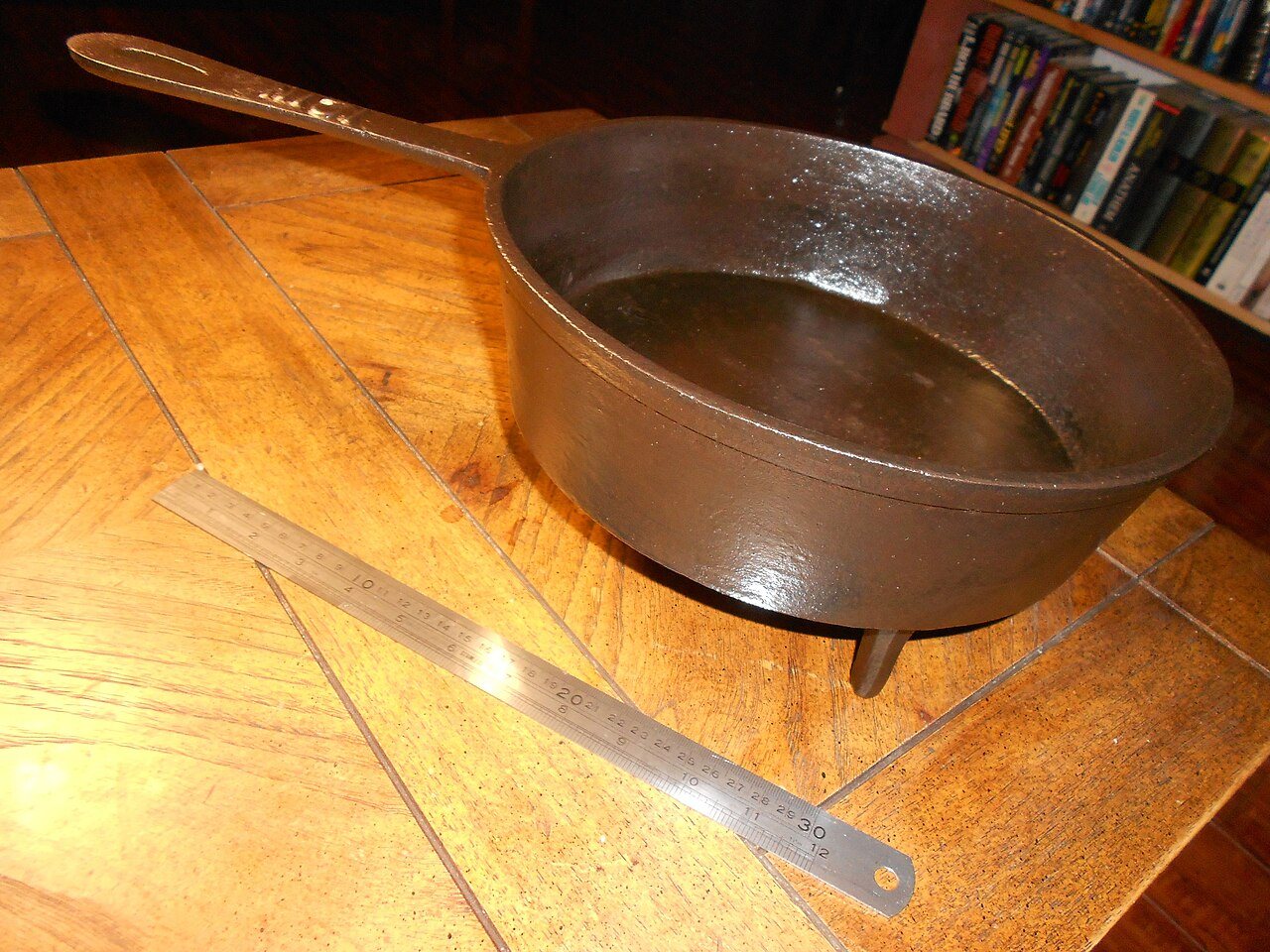
The pan in the photo above is a good example of how long these things last. It's a 19th-century "spider", a skillet with three legs so it could stand over the coals of an open hearth. It looks well cared for, and a pan like that can still fry an egg more than a century after it was cast.
Here's how to get a neglected pan back to that state, and why each step matters.
What seasoning actually is
Seasoning is oil that has been cooked onto the iron until it turns into something else. When a thin layer of fat is heated well past its smoke point, it breaks down and bonds into a hard, slick film stuck to the iron. Chemists call the process polymerisation, and cooks call the result seasoning. Layer enough of these thin films on top of each other and you get the dark, glassy, fairly non-stick surface that old pans are known for.
Two things follow from that. Thin coats work far better than thick ones, because a thick layer of oil can't polymerise properly and turns sticky instead. And rust appears where the seasoning has worn through and bare iron has met water.
Step 1: Strip the rust back to bare iron
Scrub every rusty spot with steel wool or a stiff scouring pad, using warm water and a little dish soap. Keep going until the orange is gone and you see grey metal.
Rinse the pan and dry it immediately with a towel.
Put it on the stove over a low to medium heat for a few minutes to drive out every last bit of moisture. Bare iron can start to rust again in minutes if you leave it damp.
Don't worry about the soap. The old rule against soap dates from when soaps were much harsher; a little modern dish soap won't harm proper seasoning, and on a rusty pan you're removing the old seasoning anyway.
If the pan is badly crusted with old, gummy layers, it can take a long scrub. Some people use the self-cleaning cycle of an oven to burn everything off, but the intense heat can crack or warp cast iron, and I wouldn't risk it on a pan you care about.
Step 2: Build new seasoning in the oven
Heat your oven to a high setting, somewhere around 230 to 260°C (roughly 450 to 500°F), whatever your oven can do safely.
While the pan is still warm from drying, rub a small amount of neutral cooking oil or vegetable shortening over every surface, inside and out, including the handle.
Now wipe it off with a clean cloth or paper towel, as if you'd put it on by mistake. The pan should look barely damp, not shiny. This is the step most people get wrong.
Put the pan in the oven upside down, with a sheet of foil or a tray on the rack below to catch any drips, and bake it for about an hour.
Turn the oven off and leave the pan inside to cool slowly.
One round gives you a usable pan. Three or four rounds, oiling and wiping thin each time, give you a much tougher surface. Flaxseed oil has a following for this, but it can flake later; ordinary vegetable oil or shortening is the more forgiving choice.
A plain safety note about heat, smoke and oily rags
This job involves a very hot oven and oil, so take it seriously. Expect some smoke in the first part of each bake; open a window and switch on the extractor fan or range hood. Use thick oven gloves on every part of the pan, handle included. Cast iron holds heat for a long time and gives no visible sign that it's still dangerously hot.
Cloths and paper towels soaked in drying oils, especially flaxseed or linseed oil, can heat up by themselves as they dry and have been known to catch fire. Don't leave a scrunched-up pile of them in the bin. Lay them flat outside to dry, or soak them in water in a sealed container before throwing them away.
And never plunge a hot pan into cold water. The sudden change in temperature can crack it.
How to keep it from rusting again
Most of the work is in the first few minutes after cooking. Clean the pan while it's still warm with hot water, a brush and a drop of soap if needed. Dry it at once, warm it on the stove for a minute, then rub in the thinnest film of oil you can manage. Store it somewhere dry, with a paper towel inside if you stack other pans on top.
Leave out the dishwasher and the overnight soak in the sink. Both will strip seasoning and bring the rust back. Long-simmered acidic dishes, such as a tomato sauce that bubbles for hours, can also wear away young seasoning. They're fine in a well-used pan and best avoided in a freshly restored one.
When a pan really is beyond saving
Rust, sticky patches and black flakes are all fixable. A crack is not; cast iron that has cracked can split further when heated, so retire it. A base that rocks badly on a flat stove is also more trouble than it's worth, though some people keep those for oven use only.
If yours passes those two checks, it's worth the afternoon. Personally, I'd take a rescued old skillet over a shiny new one (they tend to have smoother cooking surfaces), but that might be the romantic in me talking.