Photo: EstherDje, CC BY-SA 4.0, via Wikimedia Commons
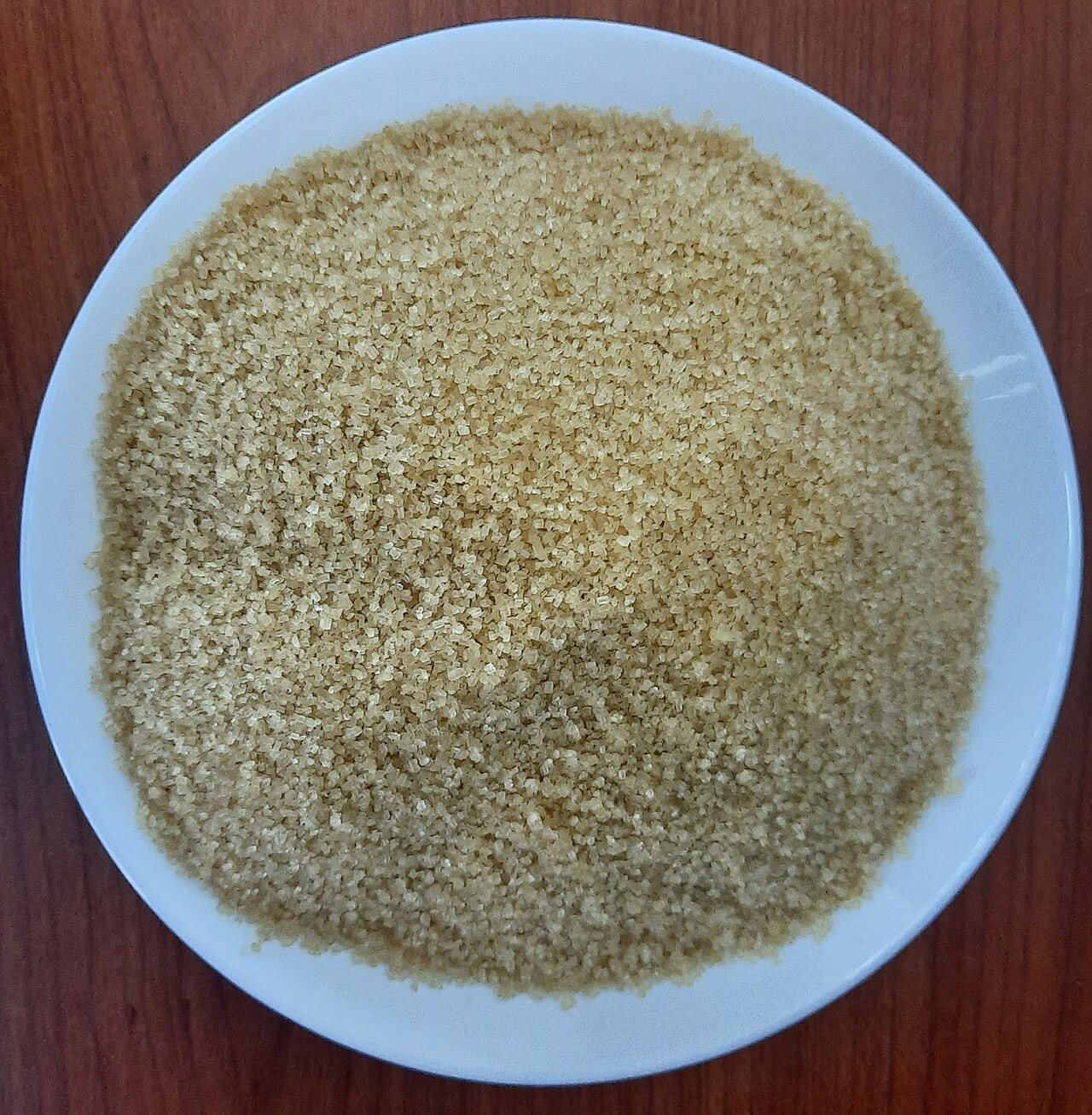
You open the bag to make cookies and find that the brown sugar has set into something closer to a paving stone. It happens to everyone, usually at the start of baking season, when the bag has been sitting half-open in the cupboard since last December.
The good news is that nothing has gone wrong with the sugar itself. It hasn't spoiled. It has just dried out, and drying out is easy to reverse.
All four methods below work. Which one you pick depends mostly on whether you need the sugar in five minutes or can wait until tomorrow.
Why brown sugar turns into a brick
Brown sugar is ordinary white sugar with molasses mixed back in. The molasses coats each crystal in a thin, slightly sticky film, and that film holds moisture, which is why fresh brown sugar feels soft and packs together when you press it.
Leave it open to the air and that moisture slowly evaporates. The molasses film dries and hardens, and in the process it glues the crystals to each other. What you end up with is one solid lump instead of loose, damp grains. Put the moisture back and the crystals let go again.
The fast fix: microwave with a damp towel
When the oven is already preheating, this is the one to use. Put the hard sugar in a microwave-safe bowl, lay a damp (not dripping) paper towel over the top, and heat it in short bursts of about 20 to 30 seconds. Break it up with a fork between bursts and stop as soon as it's soft.
The steam from the towel rehydrates the molasses, and the heat speeds it along. The catch is that the effect doesn't last. As the sugar cools it will start to firm up again, so only soften what you're about to use.
Safety note: sugar holds heat and can get much hotter than it looks, especially in the middle of a lump. Stir it with a utensil, not your fingers, and let it sit for a moment before you taste or handle it. Short bursts also keep the sugar from starting to melt, which is a different problem altogether.
The no-microwave fix: a low oven
If you don't have a microwave, spread the sugar in an oven-safe dish and warm it in a low oven, around 250°F (120°C), for a few minutes. Check and break it up often. Like the microwave method, it works quickly and wears off as the sugar cools, and it's a little easier to overdo, so stay close. The same burn warning applies to the dish and the sugar.
The overnight fix: bread or apple
This is the gentle method, and I think it gives the best texture. Put the sugar in an airtight container with a slice of fresh bread or a few slices of apple, close the lid, and leave it for a day or so. Moisture moves out of the bread or apple and into the sugar. By the next day the sugar is soft again and the bread is usually dry and hard, which tells you the swap worked.
Don't forget about it, though. Take the bread or apple out after a day or two, since anything moist left sitting in a sealed container long enough can start to grow mold. For what it's worth, the apple can leave a faint fruity smell; I doubt anyone would pick it out of a finished cookie.
The long-term fix: a terra cotta disc
Those little clay discs sold as brown sugar savers work on the same idea. You soak the disc in water for 15 minutes or so, pat it dry, and drop it into your container of brown sugar. The clay releases moisture slowly and keeps the sugar soft for weeks before it needs another soak. It can also rescue a lump that has already hardened, given a day or two.
When it won't soften (and how to stop it next time)
Very old sugar that has been hard for months might stay a bit clumpy even after you treat it. It's still perfectly usable. For small amounts you can grate it on a box grater, and anywhere it's going to dissolve anyway (a glaze, a barbecue sauce, a pan of oatmeal), the lumps won't matter.
Prevention is mostly about air. Once a bag is open, move the sugar into an airtight container, or at least squeeze the air out of the bag and seal it tightly. A terra cotta disc in the container takes care of the rest.
And if you've run out entirely, you can make a close substitute: mix about a tablespoon of molasses into a cup of white sugar for light brown, or roughly two tablespoons for dark. Work it together with a fork or your fingers until the color is even. It's soft right away, which is almost enough reason to stop buying the stuff in bags.