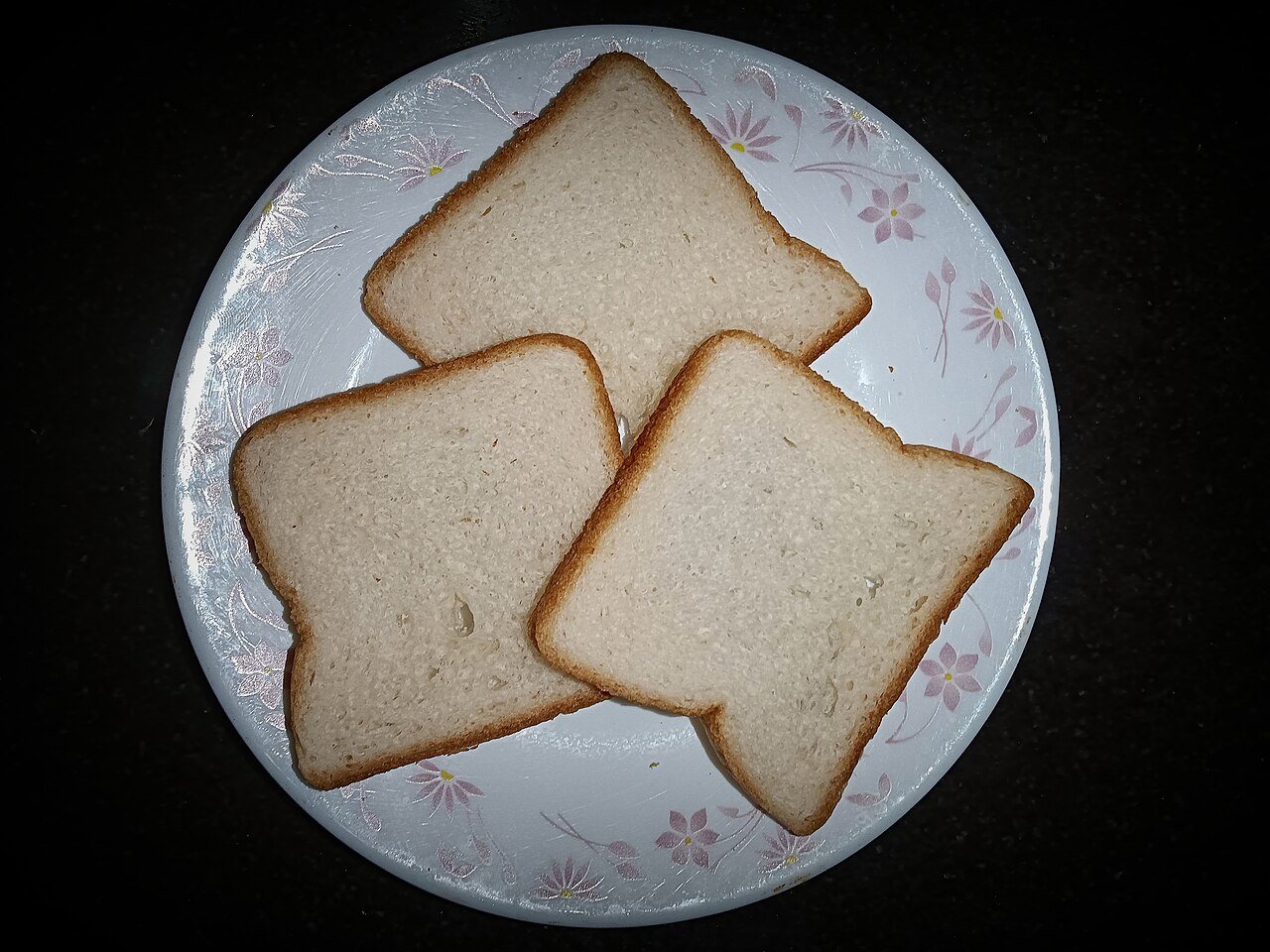
Most of us were taught that the fridge keeps food fresh, so it seems natural to put the bread in there too. Then you pull out a slice three days later and it has gone firm and crumbly, even though the bag was sealed the whole time.
That's not your imagination. For bread, the fridge is close to the worst place you can keep it, at least if you care about texture. The reason has less to do with moisture than most people think.
Here's what's going on inside a loaf as it ages, where to keep it depending on what kind of bread you bought, and how to bring a stale one back for one last good meal.
Stale doesn't mean dried out
When bread bakes, the starch in the flour soaks up water and swells into a soft gel. That's what gives fresh bread its tender, springy crumb. As the loaf cools and sits, those starch molecules slowly line up again and pack into a more ordered, crystal-like structure, squeezing water out of the gel as they go. Food scientists call this retrogradation.
The result is a crumb that feels firm and dry even when the loaf has barely lost any water overall. A sealed loaf can go stale without drying out at all, which is why wrapping it tightly doesn't stop the problem.
Moisture loss does play a part, mainly in the crust. A crisp crust pulls moisture from the crumb and turns leathery, while bread left uncovered simply dries out. But the firm, crumbly texture people describe as stale is mostly the starch.
Why the fridge makes it worse
Retrogradation happens fastest at cool temperatures just above freezing, which is exactly where your fridge sits. Bread kept in the refrigerator stales several times faster than the same bread at room temperature.
Freezing works the other way. Once the bread is properly frozen, the starch can barely move, and staling all but stops. That's why the freezer is the best place for bread you won't eat in the next couple of days, and the fridge is the worst.
The one argument for the fridge is mold. Cold slows mold growth, so in a very warm, humid kitchen some people accept firmer bread in exchange for a loaf that lasts longer. I'd still rather freeze half and keep the rest on the counter. (One food safety note: if soft bread shows mold, throw out the whole loaf rather than cutting off the spot, since mold can spread through soft bread before you can see it.)
Where to keep each kind of loaf
For crusty bread such as a baguette or a sourdough boule, store it cut side down on a wooden board for the first day. The crust protects the inside, and the crumb stays soft longer than you'd expect. After that, a paper bag or a bread box helps. Paper lets the crust breathe so it doesn't go soggy, though the loaf will dry a little faster.
Soft sandwich bread does fine in its plastic bag at room temperature. Shop-bought sliced bread often contains ingredients that slow staling, so it holds up longer than a bakery loaf. Plastic keeps it soft, but it also traps humidity, so watch for mold if your kitchen runs warm.
A bread box sits in the middle. It holds in enough humidity to slow drying without getting as damp as a sealed bag. If you have the counter space, it's a decent option for a household that gets through a loaf in a few days.
Freeze it sliced
If you buy a whole loaf and know you won't finish it, slice it first, then freeze it in a well-sealed bag with as much air pressed out as you can manage. Slicing first means you can take out two pieces at a time rather than wrestling with a frozen brick.
Frozen slices go straight into the toaster, usually on a slightly longer setting. For a whole frozen loaf, let it thaw in its bag at room temperature, then warm it in the oven to crisp the crust again.
How to revive a stale loaf
Here's the satisfying part. Because staling is mostly about starch, heat can reverse a good share of it. Warming the bread past roughly 60°C (140°F) loosens those packed starch crystals and brings back much of the soft texture.
For a crusty loaf that's gone firm, run the crust quickly under the tap or brush it with water, then put it in a hot oven, around 180 to 200°C (350 to 400°F), for about 5 to 10 minutes depending on size. The water steams and keeps the crust from scorching while the inside warms through. Use oven gloves when you take it out, and let it rest a minute so you don't burn your mouth on the crumb.
The catch is that the fix is temporary. Revived bread goes stale again quickly once it cools, so only refresh what you're going to eat at that meal.
When it's past saving
Bread that's hard all the way through still has plenty of uses, as long as there's no mold. Blitz it into breadcrumbs and freeze them, cube it and toast it for croutons, or soak thick slices in egg and milk for French toast, which I think works better with day-old bread than fresh anyway. Italian bread salads and bread puddings were more or less invented for exactly this problem.
So the short version is to keep bread on the counter if you'll eat it in a day or two and put the rest in the freezer. Save the fridge for kitchens where mold is a real problem.