Photo: West Midlands Police, CC BY-SA 2.0, via Wikimedia Commons
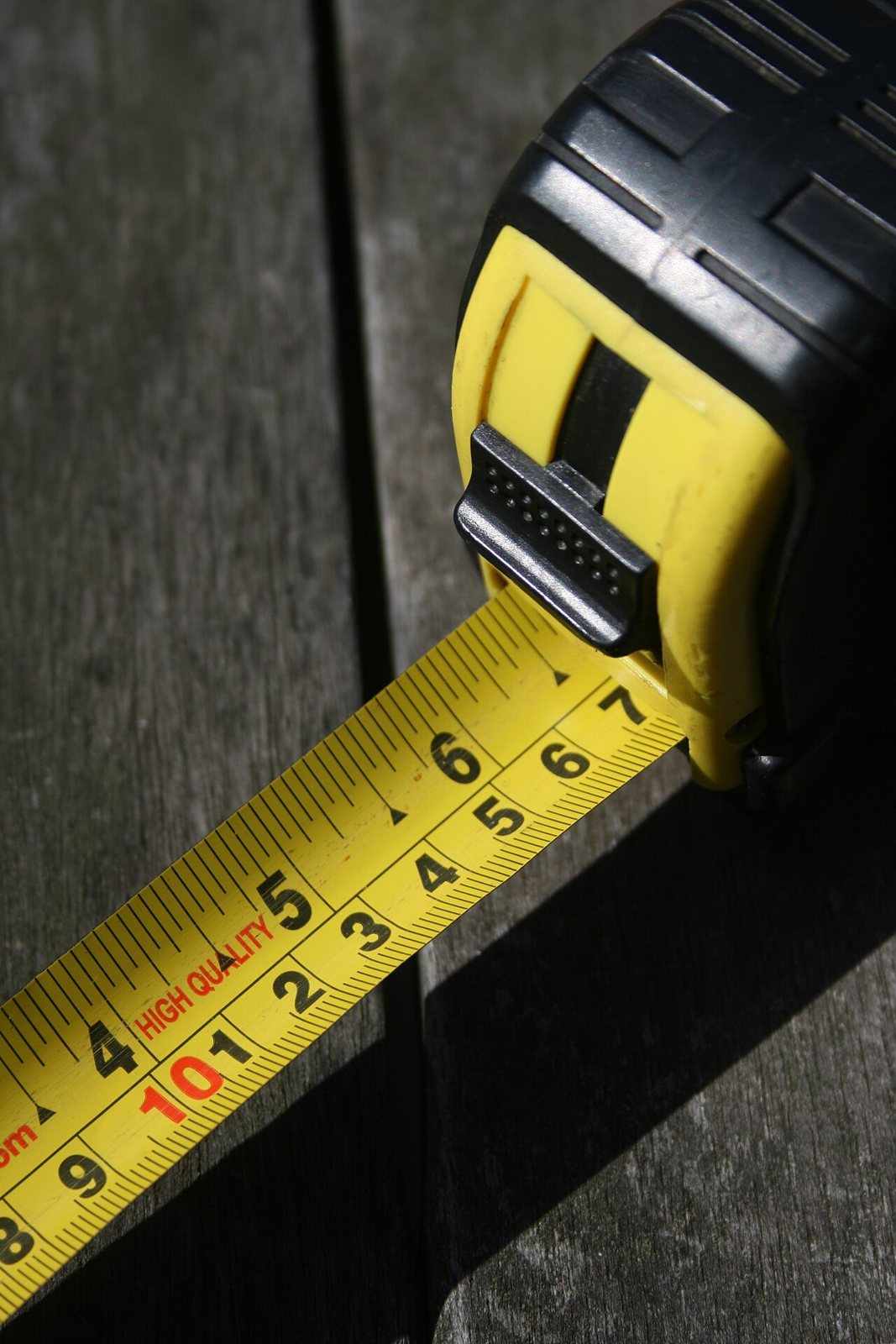
Every few months someone picks up a tape measure, notices the metal hook at the end wiggles back and forth, and decides it's worn out. Some people even squeeze the rivets with pliers to tighten it. Please don't. That little bit of play is deliberate, and fixing it ruins the tape's accuracy.
The loose hook is the best known of the tape measure's hidden features, but it's far from the only one. The ordinary retractable tape sitting in a kitchen drawer has a slot, a scale of red numbers, some odd black diamonds and, on many models, a number printed on the case that most owners never look at. Each one solves a specific problem.
If half of these are news to you, you're in good company. Most of them only seem obvious after someone points them out (which is more or less the job description here).
Why the hook slides
The hook moves by exactly its own thickness. When you hook it over the edge of a board and pull, it slides out, so the measurement starts at the inside face of the hook. When you push the tape against a wall to measure inside a space, the hook slides in, and the measurement starts at its outside face.
Either way, the zero point on the tape stays in the right place. Manufacturers call this a "true zero" hook. If the hook were fixed, one of those two kinds of measurement would always be off by the thickness of the metal, which sounds tiny until you're cutting trim or fitting a shelf and the gap shows.
If your hook really has been bent or damaged, there's an old carpenters' workaround called "burning an inch." Start the measurement at the 1-inch mark (or the 10 cm mark on a metric tape), measure, then subtract that amount. It's easy to forget the subtraction, so say it out loud as you write the number down.
The slot in the hook and the jagged edge
Look closely at the hook and many tapes have a small slot or hole in it. It's there so you can catch the hook on the head of a nail or screw and measure a long distance on your own, without a second person holding the other end.
Some hooks also have a serrated or jagged bottom edge. Press it into the surface and drag it a little, and it leaves a small scratch you can use as a mark. It's meant for the moments when your pencil has vanished, which on any home project seems to happen roughly every ten minutes.
Red numbers every 16 inches
On most American tapes, the numbers at 16, 32, 48, 64 inches and so on stand out, usually printed in red or with a red box. That's the standard spacing for wall studs in US house framing, measured from the center of one stud to the center of the next.
For a homeowner, that matters more than you might think. If you've found one stud with a stud finder or a knock, measuring out by 16 inches gives you a strong guess for where the next one is. It's a guess, not a guarantee, since older houses, renovations and corners can all break the pattern, so check before you drill.
The mysterious black diamonds
Many US tapes also carry small black diamonds, roughly every 19.2 inches. Hardly anyone outside the building trades knows what they're for.
They're for laying out floor joists and roof trusses. Divide 8 feet (96 inches) by 5 and you get 19.2. Builders sometimes use that spacing so that exactly five joists or trusses fall under each standard 8-foot sheet of plywood or similar decking, which can save material on some jobs. You'll probably never use the diamonds at home, but now at least you can stop wondering.
The number on the case
Turn your tape over. Many models have a measurement printed on the body, often something like 3 inches or 8 cm. That's the length of the case itself.
It's there for awkward inside measurements, like the inside of a window frame or a drawer, where bending the blade into the corner gives a sloppy reading. Push the back of the case firmly against one side, extend the blade to the other, read the number at the case, and add the case length. It's surprisingly accurate once you get used to it.
A safety note before you measure
Tape measure blades are thin steel, and the edges can be sharp enough to cut skin, especially on cheaper tapes or ones that have taken some knocks. Don't let the blade slide through your fingers as it retracts, and don't let it whip back into the case at full speed. That snap is how hooks get bent in the first place, and how people end up with a nick on the hand or a chipped hook.
Retract it slowly with a finger on the lock button and wipe the blade if it gets wet or sticky. And leave those rivets alone, because a hook that wobbles by its own thickness is doing exactly what it was designed to do.
See more of us on GoogleAdd Hacks Detective as a preferred source and our stories can show up more often for you in Top Stories.