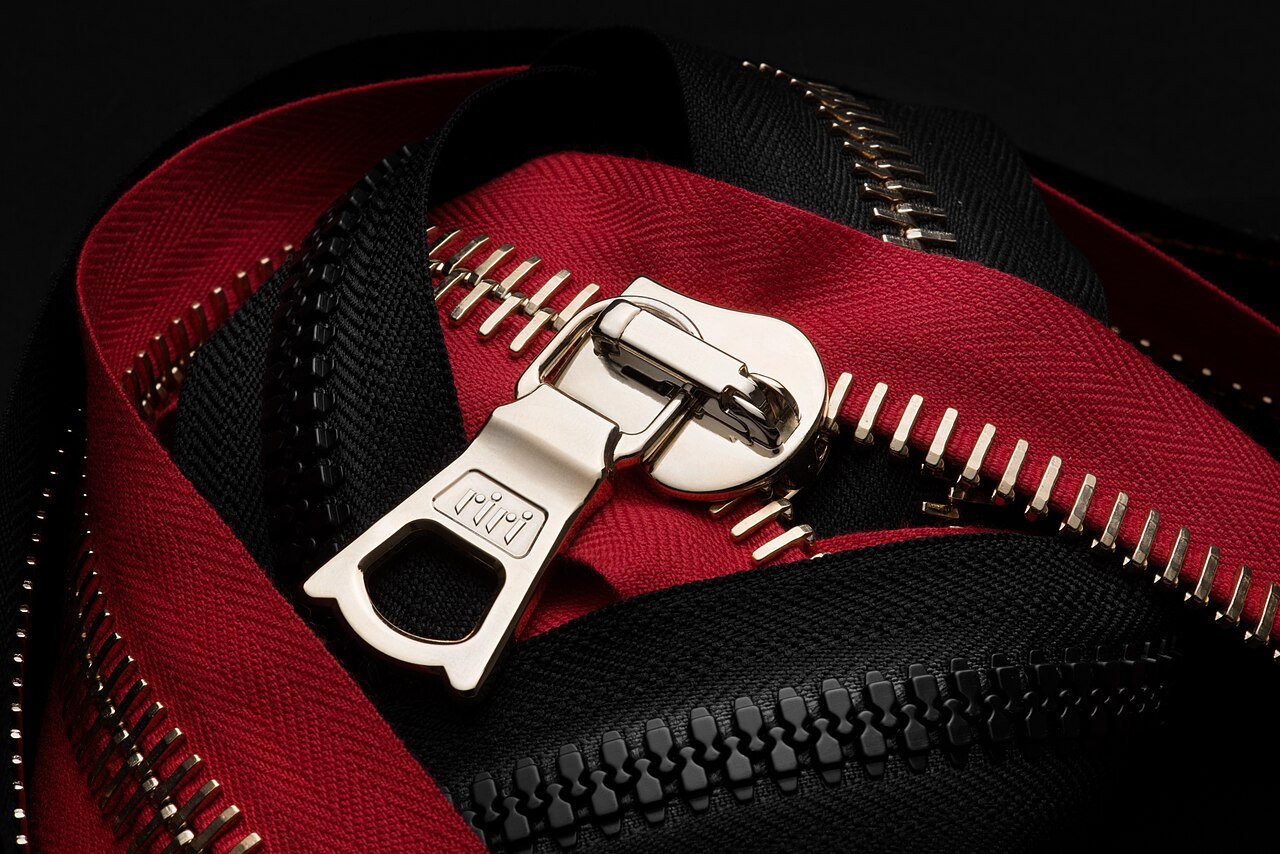
Photo: Valeriatobia, CC BY-SA 4.0, via Wikimedia Commons
Coat season has a way of finding every zipper problem in the closet. You pull last winter's jacket off the hook, start to zip it, and the slider stops halfway up and refuses to move. Or it moves fine and the teeth simply come apart behind it.
Neither one usually means the coat is done for. Most stuck zippers are dealing with too much friction, a fold of fabric in the wrong place, or a slider that has loosened over time, and all three can be sorted at the kitchen table with things you already own.
The one rule before you start: do not yank. Pulling harder on a stuck slider is the quickest way to turn a two-minute fix into a broken zipper.
First, look for fabric caught in the slider
The most common cause of a jam is a bit of lining or a loose thread that has been dragged into the slider. Look closely at both sides of the slider. If you can see fabric pinched inside, move the slider gently back the way it came, a millimeter at a time, while easing the fabric out with your fingers or a pair of tweezers.
Pull the fabric away from the teeth, not along them. Once it is free, run the slider up and down a couple of times to check it moves cleanly. If the fabric keeps getting caught in the same spot, a few hand stitches to tack the lining back from the zipper will stop it happening again.
Why a pencil works
If nothing is caught and the slider is simply stiff, the problem is friction. Dirt, road salt or a bit of corrosion on a metal zipper makes the teeth drag against the inside of the slider.
This is where the pencil comes in. Pencil "lead" is actually graphite mixed with clay, and graphite is made of thin layers of carbon that slide over each other very easily. That is why it is used as a dry lubricant on things like locks. Rub the tip of an ordinary soft pencil up and down the teeth on both sides of the stuck area, then work the slider back and forth gently. It often takes a few rounds.
I like the pencil for metal zippers on jeans and heavy jackets, because it is dry and there is not much to clean up afterwards. The catch is that graphite can leave a gray mark, so be careful with light-colored fabric and keep the tip on the teeth.
Soap, wax and lip balm for stiffer jams
If the pencil does not do it, a waxy lubricant usually will. A dry bar of soap, the end of a white candle or a stick of plain lip balm all work the same way. Rub a little along the teeth near the slider, then wiggle the slider gently to spread it in.
These tend to work better than graphite on plastic zippers, like the ones on most backpacks and puffer jackets. Use a small amount, since anything waxy or oily can leave a mark on fabric. If you are worried about a nice coat, test on a hidden part of the zipper first (the bottom few teeth inside the hem are a good spot).
Skip cooking oil. It works for a moment, then attracts dirt and can stain.
When the zipper splits behind the slider
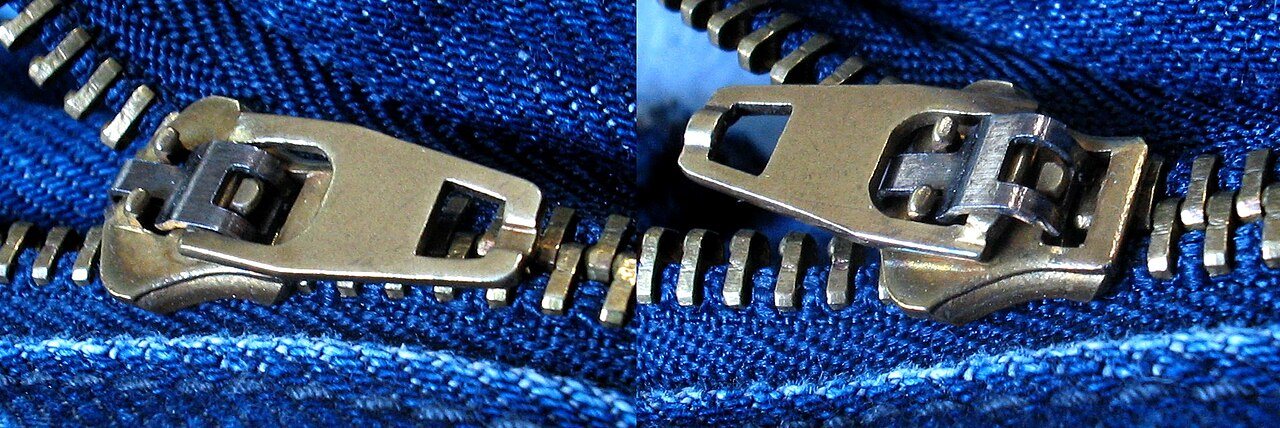
Two close-up views of a brass jeans zipper slider, with the pull lying flat on the left and raised on the right, showing the locking mechanism. Photo: A7N8X, CC BY-SA 3.0, via Wikimedia Commons
A zipper that closes and then immediately opens up again behind the slider is a different problem. Usually the slider has been pulled slightly open over time, so it no longer presses the two rows of teeth together firmly enough.
The fix is a small squeeze. Move the slider all the way down to the bottom stop. Then, with a pair of pliers, press very gently on the sides of the slider near the end where the teeth come out, a little at a time, testing the zipper after each squeeze.
A safety note: go slowly and use light pressure. Sliders are small and some are made of brittle metal or plastic, so squeezing too hard can crack them, and a slipped pair of pliers can pinch fingers. If the slider feels like it is about to give, stop.
While you are looking at the slider, check whether it has a locking pull, like the jeans zipper in the photo above. On that kind, the pull lying flat pushes a small pin into the teeth to stop the zipper creeping down. If the pull is stuck in the flat position, lifting it fully upright before you move the slider often solves what looked like a jam.
When it is not worth fixing yourself
Some zippers are past the kitchen-table stage. Missing or bent teeth, a zipper tape that has torn away from the fabric, or a slider that has come off one side completely all usually mean a repair job.
You do have cheaper options than a new coat. Hardware and craft stores sell replacement sliders, which can be fitted if the teeth are still in good shape. And a tailor or dry cleaner can replace a whole zipper, which is often well worth it on a good winter coat. I would get a quote before deciding the coat is finished.
Keep zippers running smoothly
Most zipper trouble is easy to prevent. Close zippers before putting clothes in the washing machine, so the teeth do not snag other things or get bent. Brush off grit and salt after a slushy day, especially on boots and jacket hems. And when a zipper starts to feel stiff, give it a quick pass with the pencil before it gets stuck, rather than after.
If you only take one habit from this, make it that one. Keeping a soft pencil in the drawer nearest your coats costs nothing, and a pencil is a lot easier to find than a tailor on a cold morning.
See more of us on GoogleAdd Hacks Detective as a preferred source and our stories can show up more often for you in Top Stories.