Piqua Hosiery Co, Public Domain, via Wikimedia Commons
Every winter there's a moment when I pull on a favorite sweater and notice the sides and underarms have gone fuzzy with tiny balls of fiber. The front still looks fine. The bits that rub against a bag strap or my own arms look like they've been through a tumble dryer with a pack of tennis balls.
Those balls are called pills, and they don't mean the sweater is finished. You can take them off in a few minutes with tools you may already own, and a few changes to how you wash and wear knitwear will slow them down a lot.
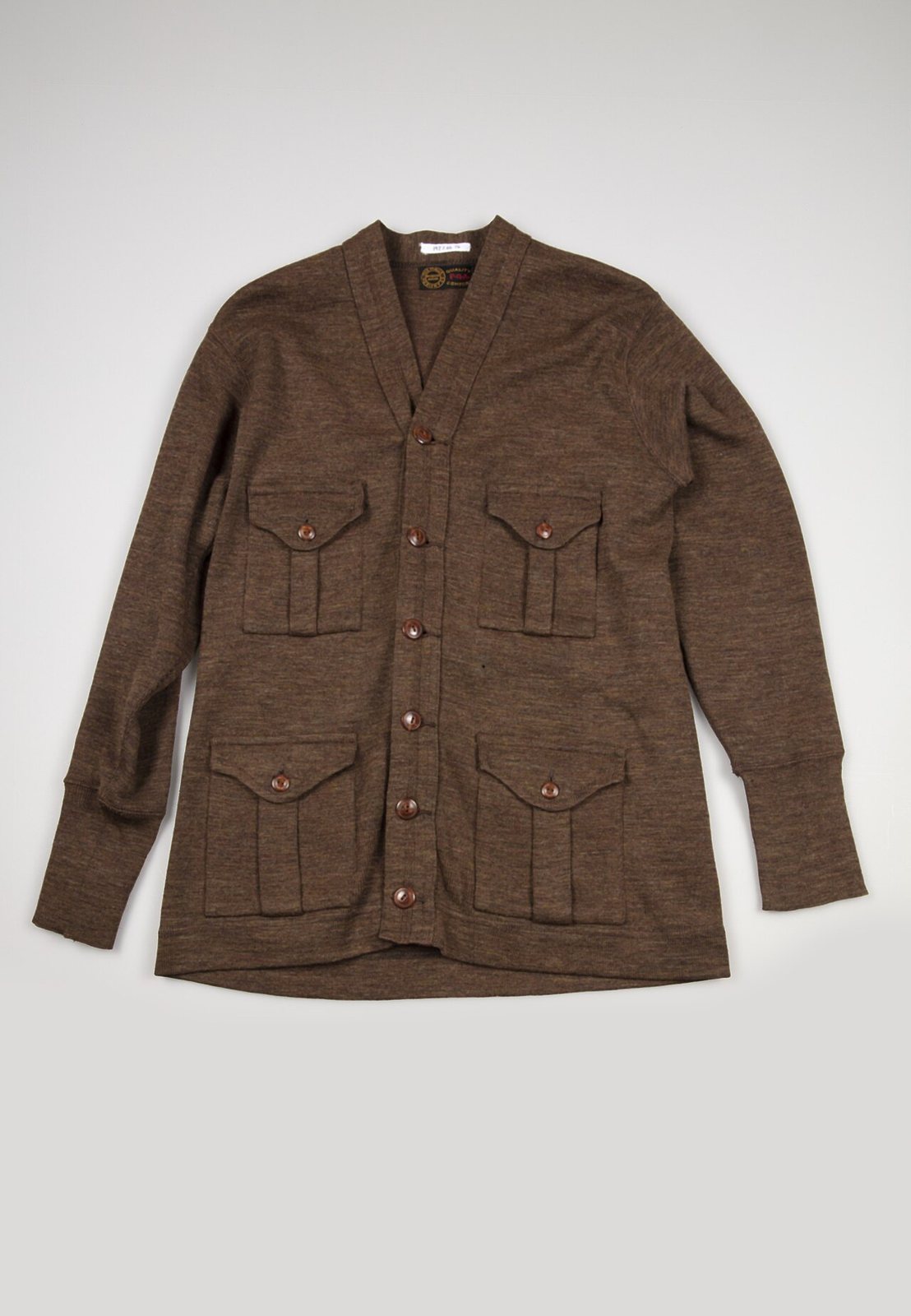
The cardigan in the photo above, by the way, is a museum piece that belonged to Charles Lindbergh. It's decades old and, in that photo at least, looks smoother than some sweaters I bought last year. Good fiber and careful handling go a long way.
Why pills form in the first place
Yarn is made of lots of fibers twisted together. When fabric rubs against itself or something else, the ends of short fibers work loose from the surface. Keep rubbing and those loose ends tangle into little knots, still attached to the fabric by a few fibers.
That's why pills show up in predictable places: under the arms, along the sides where your arms swing, on cuffs, and wherever a backpack or seatbelt sits.
Some knits pill much more than others. Fabrics made from shorter fibers or loosely spun, loosely knitted yarn have more ends to work free. Soft luxury knits can pill quite a bit in their first few months of wear, simply because the fibers are so fine. Fiber type matters too. Wool pills tend to break away on their own over time, because wool fibers are relatively weak. Synthetic fibers like polyester and acrylic are much stronger, so their pills stay anchored, and in a wool and acrylic blend the synthetic fibers can hold onto the pills for good.
The three tools that work
An electric fabric shaver (sometimes sold as a de-piller or lint shaver) is the easiest option. It has a small rotating blade behind a metal guard, and it trims pills off as you glide it over the fabric. Lay the sweater flat on a table, keep the fabric smooth, and use light, circular passes. Empty the lint chamber often.
A sweater comb or a de-pilling stone works by hand. You brush it across the surface in one direction and it catches and pulls off the pills. It's slower, but it's gentler on fine knits and doesn't need batteries.
A disposable razor is the budget version. Stretch a section of fabric flat over a hard surface and draw the razor lightly across it in short strokes, as if you were shaving very carefully. It works well on smooth, tight knits.
A plain safety note: razors and fabric shavers have real blades. Keep your fingers away from the cutting edge, work on a flat, stable surface, and don't press down. Test on an inside seam first. On loose, chunky or very thin knits, a razor or shaver can catch a loop and cut a hole, so use a comb on those.
One thing not to do: don't pick pills off with your fingers. Pulling them drags more fiber out of the yarn and makes the next batch of pills come faster. (I know it's satisfying. I still do it at red lights sometimes.)
Washing habits that slow pilling down
Most pilling happens through friction, and a washing machine is a friction machine. Turn sweaters inside out before washing so the outside surface rubs less. Use a gentle or wool cycle with cool water, or hand wash, and put delicate knits in a mesh laundry bag. Keep them away from jeans, towels and anything with zippers or Velcro.
Skip the dryer. Lay sweaters flat to dry on a towel, reshaping them as you go. Hanging a wet knit stretches the shoulders.
Washing less often helps too. Wool in particular doesn't need a wash after every wear. Airing a sweater out overnight is often enough, and giving it a day's rest between wears lets the fibers settle.
Shopping for knits that pill less
When you're buying, check the label. Tightly knit fabrics with a smooth surface usually pill less than fluffy, loose ones. A small amount of synthetic in a blend isn't automatically bad, but be aware it can make the pills that do form stick around.
A quick test I use in stores: rub a hidden bit of fabric between your thumb and finger a few times. If it fuzzes up right away, it will probably pill fast once you start wearing it. It isn't scientific, but it has saved me from a couple of disappointing buys.
Keeping it up through the season
A sweater that gets a quick pass with a comb or shaver every few weeks will look far better in March than one that gets a big rescue job once a year. Keep a shaver or comb near where you fold your knits and do the underarms and sides whenever you notice fuzz.
If a sweater is already badly pilled all over, give it one patient session with a shaver before you decide it's done. Most of the ones I've rescued that way are still in my drawer.
See more of us on GoogleAdd Hacks Detective as a preferred source and our stories can show up more often for you in Top Stories.