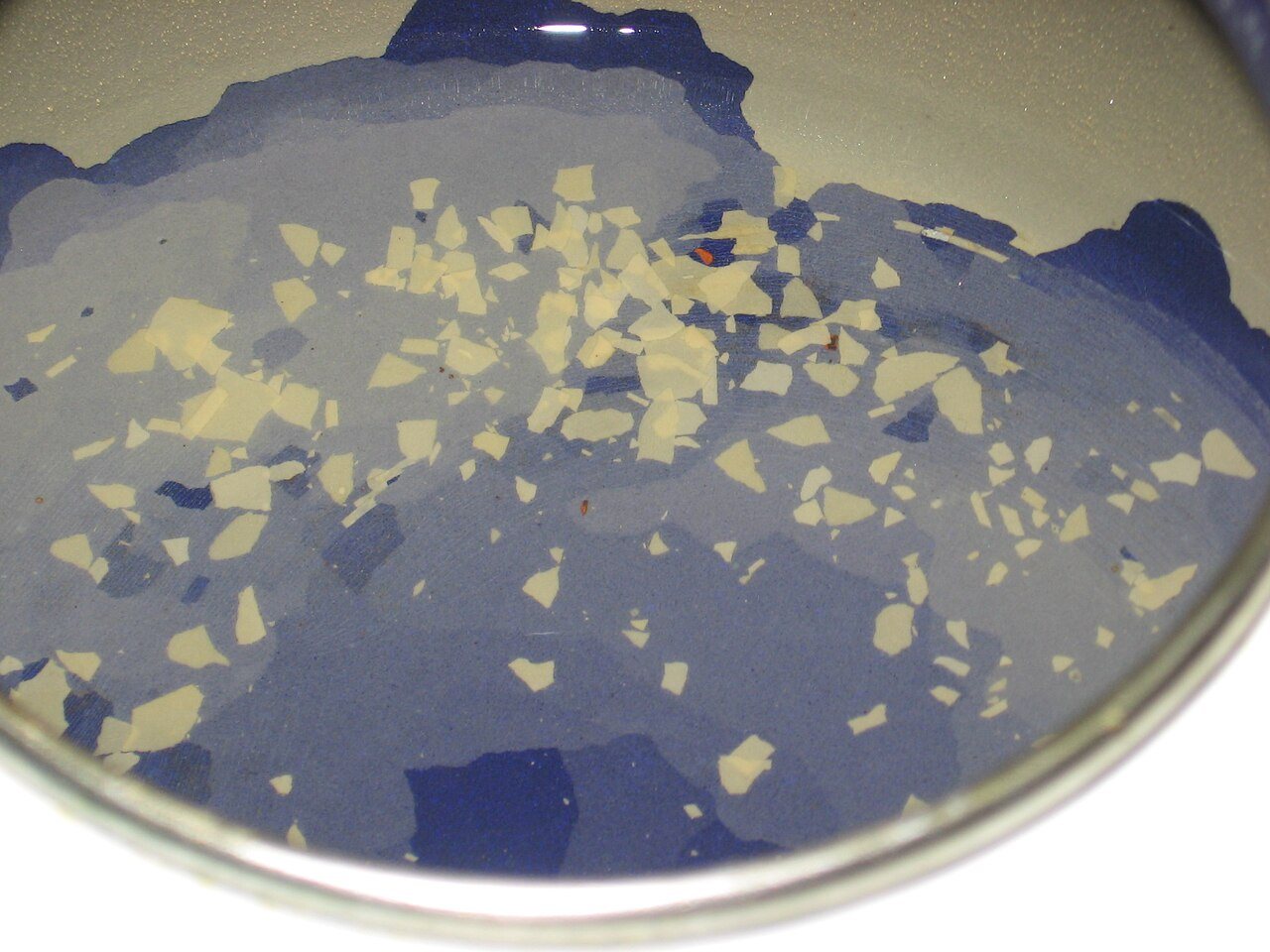
You notice it first in the mug. A few white flakes floating on top of your tea, or a faint scum that wasn't there a month ago. Look inside the kettle and the element, or the bottom plate, has grown a chalky crust.
That's limescale, and if you live in a hard water area it comes back no matter what you do. The good news is that getting rid of it costs very little and takes about an hour, most of which is waiting.
Of the usual home methods, the two that work reliably are white vinegar and citric acid. Here's how to use each, why they work, and the situations where I'd skip both.
What limescale actually is
Hard water carries dissolved minerals, mainly calcium and magnesium. When you heat it, some of the calcium comes out of solution as calcium carbonate, the same stuff as chalk, and it settles on the hottest surfaces in the kettle. Every boil adds a thin layer.
Not sure whether your water is hard? The kettle is usually the first clue, but the shower screen and the taps give it away too, with white marks that come back a few days after cleaning. Your local water supplier will normally publish hardness figures for your area if you want to check properly. Glass kettles make the whole thing very obvious, which is either useful or slightly horrifying, depending on how long it has been.
It isn't dangerous in itself. The bigger annoyances are the flakes in your drinks and the fact that a thick layer of scale on the heating surface can make a kettle work harder to heat the water.
Why acid shifts it
Calcium carbonate dissolves in acid. When vinegar (acetic acid) or citric acid meets the scale, the reaction breaks it down into a soluble salt, water and carbon dioxide. That's the fizzing you sometimes see. Once the scale is in solution, it simply pours away.
This is also why the trick doesn't need scrubbing. Give the acid enough time and it does the work for you.
Method one: white vinegar
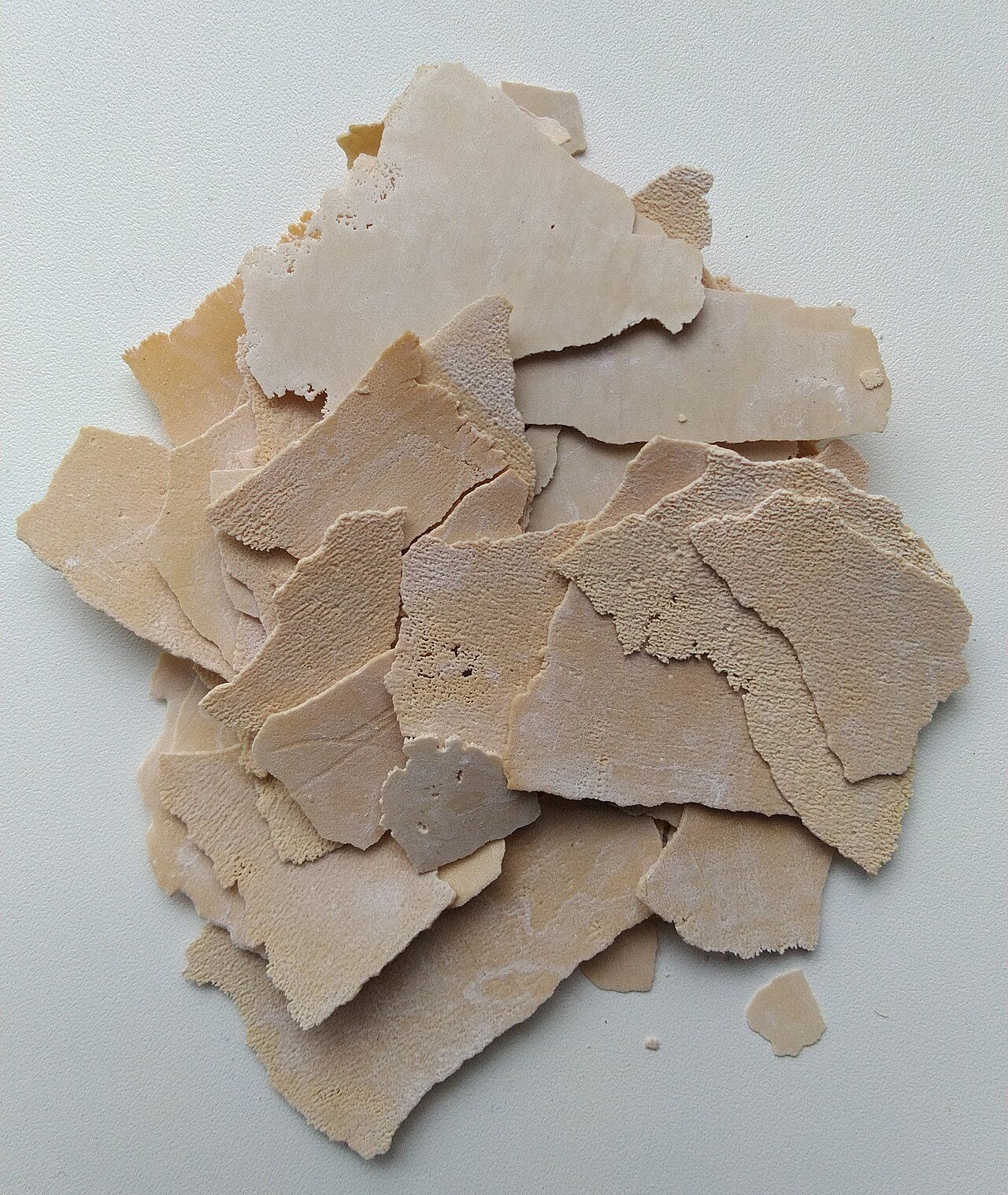
A pile of thick limescale flakes removed from a kettle. Alexander Davronov, CC BY-SA 4.0, via Wikimedia Commons
Fill the kettle about halfway with a mix of equal parts white vinegar and water. Bring it to the boil, switch it off and leave it to stand for an hour. For heavy scale you can leave it longer, or repeat the whole thing.
Pour the solution away and rinse the kettle well. Then fill it with fresh water, boil it and throw that water away. Do this a second time. It gets rid of the vinegar taste, which otherwise lingers in your first cup of coffee in a way you won't forget quickly.
Vinegar works well, but the smell while it boils is strong. Open a window and maybe don't do it just before guests arrive.
Method two: citric acid
Citric acid is sold as a dry powder in supermarkets and hardware shops, often in the baking or cleaning aisle, and it's what a lot of commercial descalers contain anyway. Dissolve a tablespoon or two in a kettle half full of water, boil it, then leave it to work for 20 minutes to an hour before emptying and rinsing.
I prefer this one, if I'm honest. There's no smell to speak of, and it seems to leave less of an aftertaste. Lemon juice works on the same principle, but you need a lot of it and it's weaker and more variable, so the powder is the better buy.
When not to use either
Check the manual first. Some manufacturers say which descaling methods they approve, and a few warn against vinegar for particular models or finishes, so their instructions win over anything you read online, this piece included.
A kettle with a visible coiled element and a lot of thick, layered scale may need two or three rounds. The same two methods work on most stainless steel and plastic kettles. If yours has a removable limescale filter in the spout, take it out and soak it separately in the same solution, because it clogs faster than anything else.
If the inside is pitted, corroded or the scale is coming away with bits of coating, it's probably time for a new kettle rather than another descale.
Safety notes
You're boiling an acid solution, so handle the kettle carefully and let it cool a bit before pouring. Keep the steam away from your face, and ventilate the room when using vinegar. Never mix vinegar or citric acid with bleach or bleach-based cleaners, because combining acids with bleach releases chlorine gas. Rinse thoroughly before you use the kettle for drinks again.
Keeping it from coming back
In a hard water area you can't stop scale forming, but you can slow it down. Boiling only the water you need helps, and so does emptying the kettle at night instead of leaving water to sit in it. Descaling little and often (once a month is plenty for most homes, I'd guess) is far easier than chipping away at a thick crust later. A filter jug also takes out some of the minerals before the water ever reaches the kettle, which helps more than you might expect.